Introduction
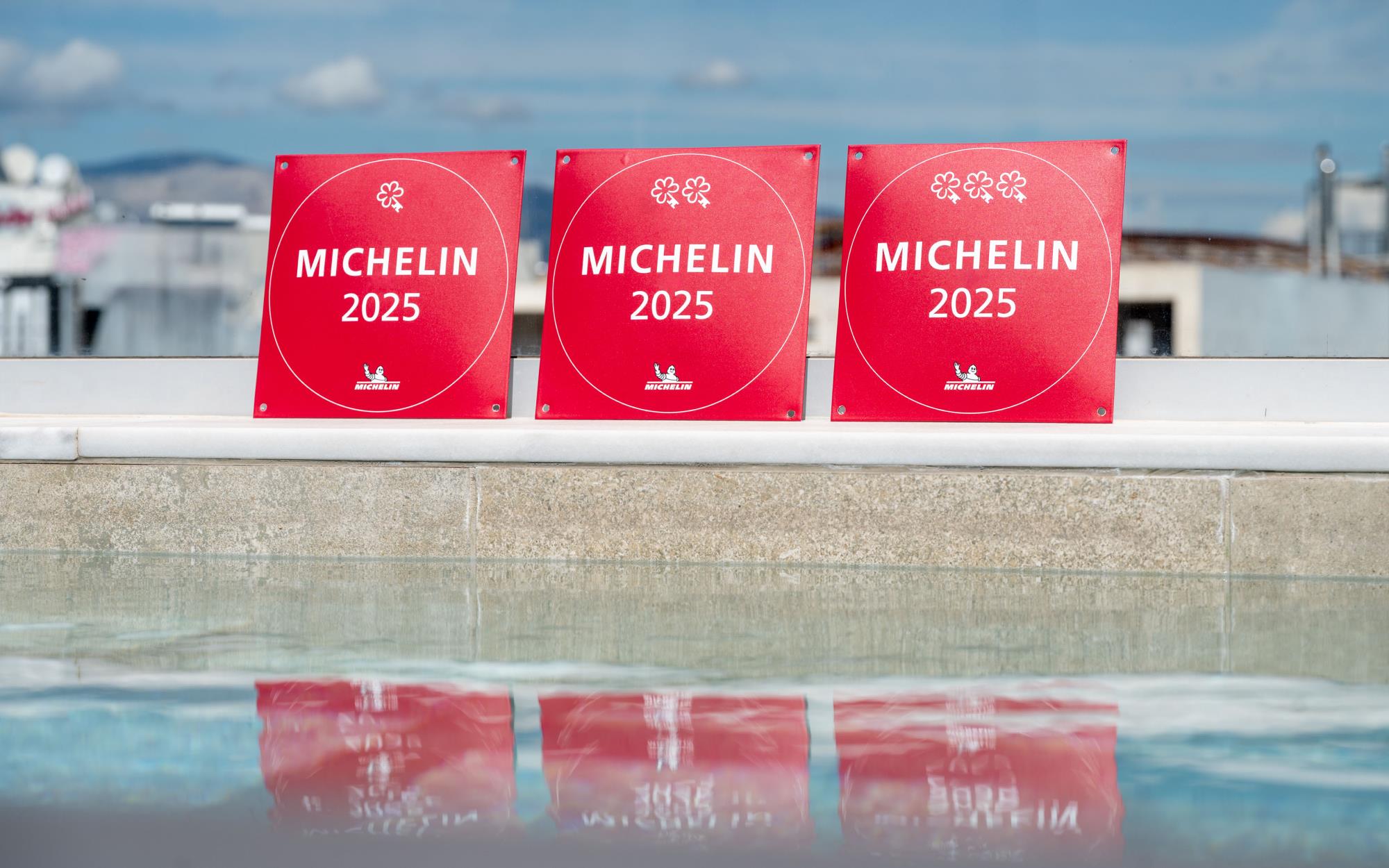
A Michelin Key is awarded for “outstanding stays” against five universal criteria, with personality, design, and a hotel’s integration into its destination scored alongside service and comfort. Forbes Five-Star inspections, by contrast, are weighted roughly 67 percent on service and 30 percent on facilities, per Forbes Travel Guide leadership. The shift in weighting, not the existence of a new badge, is the substantive change in how luxury hotels are now rated.
The five criteria Michelin inspectors score
Michelin publishes five universal criteria that every property is measured against:
1. The hotel is an open door to its destination.
2. Excellence in interior design and architecture.
3. Quality and consistency in service, comfort, and maintenance.
4. Consistency between the level of the experience and the price paid.
5. Individuality, reflecting personality and authenticity.
Three of the five (open door, design, individuality) are explicitly about how a hotel expresses place and authorship. Inspectors are full-time, salaried Michelin employees who book under assumed names, pay full rate, and make anonymous return visits, per the Michelin Guide’s published process. The hotel-inspection team is separate from the restaurant-Star inspectors.
“The MICHELIN Key is a clear, reliable indication for travelers. Just as the MICHELIN Star distinguishes those restaurants that are at the peak of their art, the MICHELIN Key recognizes the most exceptional hotels throughout the world,” said Gwendal Poullennec, International Director of the Michelin Guides, in the October 2023 launch announcement.
The first French selection in April 2024 named 189 properties (24 Three-Key, 38 Two-Key, 127 One-Key). The first global selection in October 2025 covered 2,457 hotels in 49 countries: 143 Three-Key, 572 Two-Key, and 1,742 One-Key.
How Keys differ from Michelin restaurant Stars
A hotel’s Key count is decided independently of any restaurant Stars on the property. Decisions are collective, drawn from multiple inspector visits and a consensus meeting, not the verdict of a single reviewer. Hotel inspectors come from hospitality backgrounds rather than culinary ones.
There is no formal relationship between the two awards. A Three-Key hotel can have zero Stars, and a Three-Star restaurant can sit inside a One-Key hotel.
Michelin Key vs Forbes Five-Star vs AAA Five-Diamond
Dimension | Michelin Key (Three-Key) | Forbes Five-Star | AAA Five-Diamond |
Criteria | 5 universal criteria, qualitative | ~900 objective standards | “4 Cs” framework |
Scoring weight | Balanced across design, service, place, value | 67% service / 30% facility (per Forbes leadership) | Consistency and physical attribute weighted heavily |
Inspector model | Full-time, salaried, anonymous | Anonymous, 2-night paid stays | Full-time, professionally trained, anonymous |
Top-tier count | 143 Three-Key (2025, global) | 336 Five-Star hotels (2025) | ~140 Five Diamond hotels |
Geographic scope | 49 countries | 90 countries | North America, Caribbean, Costa Rica |
Forbes Travel Guide’s 2025 list named 336 Five-Star hotels across 90 countries. President of Standards and Ratings Amanda Frasier described the methodology to LEADERS Magazine in January 2025: “The inspector provides answers and then that is computed as part of an algorithm that is centered around 30 percent facility, 67 percent service... A rating cannot be bought.”
AAA Five Diamond covers roughly 140 hotels across North America, the Caribbean, and Costa Rica, about 0.3 percent of the 27,000 properties AAA approves annually. Its rubric is built on the “4 Cs”: cleanliness, comfort, cuisine, and consistency.
Hotels with Keys but no Forbes or AAA recognition
Independent and design-led properties are over-represented in Key awards relative to Forbes or AAA. Procurement firm Avendra reported that among its 2024 client portfolio, 29 percent of U.S. Michelin Key recipients were Avendra clients versus 43 percent of AAA Five Diamond holders, a gap that suggests Keys reaches a different population at the boutique end of the market.
Properties named in Skift’s launch coverage and AFAR’s explainer include architect-led and small-scale hotels that hold Keys without Forbes Five-Star or AAA Five-Diamond equivalents, such as The Whitby (Firmdale, New York), Maison de la Luz (New Orleans), and Hotel Saint Augustine (Houston). The reverse also occurs: several large flagship properties hold Forbes Five-Star and AAA Five-Diamond status but received fewer than three Keys, confirming that the systems are not interchangeable.
Multi-award winners exist but cluster at the largest, most service-heavy properties. The Post Oak Hotel in Houston holds all three, per its 2025 announcement. Four Seasons Resort Punta Mita in Nayarit, Mexico holds all three as well: two Michelin Keys, a 2026 Forbes Five-Star award (its tenth consecutive year), and AAA Five Diamond status held continuously since 2001.
Where this breaks down
The framing that Keys measures what Forbes and AAA miss has real limits.
Forbes Travel Guide does score intangibles. Its inspector rubric evaluates whether “the location, design or other elements conjured a strong sense of place,” and AAA’s published guidelines require evaluation of ambiance, architectural features, and decor character. The Keys differentiation is one of weighting and emphasis, not an entirely new dimension.
Guest-experience data also raises questions. Shiji Group analyst Bruno Saragat reviewed 553,742 guest reviews across five cities and found an inverse relationship in Paris between Key count and the Global Review Index: Three-Key hotels averaged 94.60 percent versus 95.25 percent for One-Key. In New York, the highest-scoring Three-Key property ranked only 14th by guest reviews.
Michelin’s hotel business model is structurally different from Forbes or AAA. Michelin acquired booking platform Tablet Hotels in 2018 and collects 10 to 15 percent commission on reservations made through guide.michelin.com, per Skift’s reporting. Bloomberg’s October 2025 analysis flagged the commission stream as a credibility question the restaurant guide does not face.
Geography is also skewed. France took 23 of the 143 Three-Key awards in the 2025 global selection, while the United States received 16. By total Keys awarded across all three tiers, France (203) and Italy (188) lead the global field.
Frequently asked questions
What is a Michelin Key, and how does a hotel earn one, two, or three?
A Michelin Key is a hotel distinction launched in 2024. Properties are scored against five universal criteria and awarded One, Two, or Three Keys based on consistency across them. Decisions are collective, made after multiple anonymous inspector visits and a consensus meeting.
Are Michelin Key inspectors the same people who award restaurant Stars?
No. Michelin operates a separate hotel inspection team. Both teams are anonymous, salaried Michelin employees, and Key decisions are independent of any Star decisions at the same property.
Can a hotel hold a Michelin Key, a Forbes Five-Star, and an AAA Five-Diamond at the same time?
Yes. The Post Oak Hotel in Houston is one documented example. Overlap is common at the largest luxury properties, but the populations diverge sharply at the design-led independent end.
Why did Michelin start rating hotels in 2024?
Michelin had recommended hotels in its guides for decades but only formalized the Key as a stand-alone award in October 2023. The first national selection followed in April 2024 in France. The company has positioned it as a parallel to the restaurant Star, not a replacement for existing hotel ratings.
Should travelers trust Michelin Keys over Forbes or AAA?
Each system signals something different. Forbes Five-Star is the strongest indicator of consistent service. AAA Five-Diamond is the most reliable indicator of physical and operational standards in North America. Michelin Keys lean harder on design, individuality, and a property’s connection to its destination.
Explore Related Stories


Read the Room Before You Book.