Every January, luxury hospitality goes through its awards season. Forbes Travel Guide publishes its Star ratings. Michelin releases new Keys. Conde Nast Traveler reveals the Gold List. Travel + Leisure tallies reader votes. AAA announces its Diamond winners. The World Travel Awards hand out trophies at a gala.
Each system produces a "best hotels in the world" list. None of them agree.
That's because they're answering different questions with different methods, and the hotels that rank highest in one system sometimes don't appear at all in another. Understanding where the systems converge (and where they don't) is more useful than treating any single list as definitive.
The Hotels That Win Everywhere
A small group of properties consistently appears across all or nearly all major rating systems. These are the hotels where Forbes inspectors, Michelin reviewers, magazine editors, and hundreds of thousands of readers all independently arrive at the same conclusion: this place is exceptional.
The list is shorter than you'd expect.
Aman Tokyo holds Michelin Keys, Forbes Five Stars, regular Gold List appearances, and strong reader poll performances. The property succeeds across systems because it scores well on both the service metrics (Forbes) and the character metrics (Michelin). The design is distinctive enough for editorial recognition, and the guest experience is consistent enough for professional inspection.
Mandarin Oriental Bangkok has maintained Forbes Five Stars for over a decade, appears regularly on both the Gold List and T+L World's Best, and earned Michelin Keys when the program expanded to Thailand. The property benefits from longevity (it opened in 1876) and a service culture that predates modern rating systems.
Claridge's (London) shows up across Forbes, Michelin, CNT, and T+L despite being a very different property from the tropical resorts that dominate reader polls. The Art Deco building, the afternoon tea, the doormen in top hats: Claridge's has enough character for Michelin and enough service precision for Forbes.
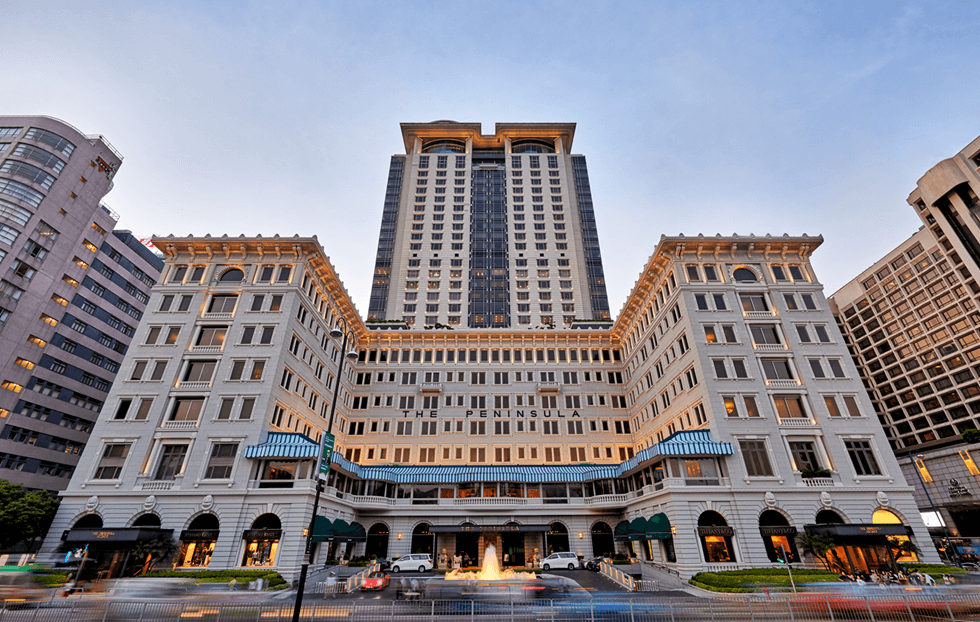
The Peninsula Hong Kong is another property that crosses every system. Forbes Five Stars (consistently), Michelin Keys, Gold List regular, T+L perennial. The Peninsula's advantage is that it operates at the intersection of operational excellence and cultural identity, which is exactly where the major rating systems overlap.
Park Hyatt Tokyo benefits from one of the most distinctive settings in global hospitality (floors 39-52 of the Shinjuku Park Tower) and a service standard that translates across every evaluation framework. The property also carries a cultural cachet (helped by its appearance in Lost in Translation) that boosts its editorial appeal.
Where the Systems Diverge
The more interesting analysis is where the rating systems disagree, because the disagreements reveal what each system actually values.
Forbes says yes, Michelin says no. Large chain luxury hotels with immaculate service but standardized design often earn Forbes Five Stars without earning Michelin Keys beyond One Key. The service is flawless. The 900-point checklist is met. But the property could be in Dubai or Dallas and feel identical. Michelin's "personality and character" criterion penalizes interchangeability.
Michelin says yes, Forbes says no. Small, design-forward boutique hotels with casual (but warm) service earn Michelin Keys while falling short of Forbes Five Stars. A 12-room hotel in Portugal with owner-operators, local art, and a kitchen that sources from neighboring farms might earn Two Michelin Keys for character and contribution to place. But if the staff doesn't answer the phone within 3 rings or restock the minibar within 2 hours, the Forbes checklist knocks the score below 90%.
Readers love it, editors don't. Reader polls (T+L, CNT Readers' Choice) favor well-known properties with high repeat guest rates. A beloved Caribbean resort with a loyal clientele can top the reader poll for a decade. The CNT Gold List editors, who are looking for novelty and discovery, may have moved on years ago. Reader polls measure satisfaction at scale. Editorial lists measure editorial interest.
Editors love it, readers don't. New openings and emerging destinations appear on the Gold List and in Michelin's selections before readers have heard of them. A just-opened property in an under-visited region might earn Keys and editorial praise while receiving zero reader votes because nobody's stayed there yet.
The Regional Patterns
Awards don't distribute evenly across the globe, and the gaps say as much about the rating systems as they do about the hotels.
Europe dominates Michelin Keys (the system is European in origin and sensibility), performs well on Forbes (major European capitals have deep luxury hospitality cultures), and shows strongly on editorial lists (CNT editors travel to Europe constantly). Reader polls are more mixed: European city hotels compete with tropical resorts for reader attention, and the resorts usually win.
Asia punches above its weight on Forbes (the service culture in Japan, Thailand, and Hong Kong aligns perfectly with Forbes's 900-point methodology) and increasingly on Michelin Keys (the expansion to Asia revealed properties with extraordinary character). Reader polls favor the region's beach resorts (Maldives, Thailand, Bali) more than its city hotels.
The Middle East (particularly Dubai and Abu Dhabi) performs well on Forbes and WTA but struggles with Michelin Keys (the character criterion is challenging for new-build luxury in the desert) and editorial lists (CNT editors have historically been cooler on the Gulf than Forbes inspectors).
Latin America is underrepresented across all systems relative to the quality of its hospitality, partly because Forbes and Michelin were slow to expand coverage to the region. Mexico received Michelin Keys for the first time in 2024, and the coverage is still catching up to the reality on the ground.
Africa receives strong editorial attention (safari lodges and Cape Town hotels appear regularly on the Gold List) but limited Forbes and Michelin coverage. The WTA fills some of the gap, but the continent remains the most under-rated region in global hospitality.
The Properties That Win Nothing
Some excellent hotels don't appear on any major awards list, and the reasons are instructive.
Geographic blind spots. If Forbes hasn't expanded to your country, Michelin hasn't sent an inspector, and the property isn't on a CNT editor's radar, you can be world-class and invisible to the rating systems simultaneously. Entire countries with outstanding hospitality (Colombia, Georgia, Oman) are underrepresented.
Scale mismatch. A 6-room guesthouse in the French countryside might deliver the best hospitality experience of your life, but it's too small for Forbes inspection, too remote for Michelin coverage (though this is changing), and not on any editor's assignment list. The rating systems are biased toward properties that are large enough to inspect, prominent enough to discover, and accessible enough to visit.
Philosophy mismatch. Some hotels deliberately operate in ways that conflict with rating criteria. A property that values informality, spontaneity, and minimal structure may produce extraordinary guest experiences while failing Forbes's service checklist. A hotel that rejects design trends in favor of simplicity might lack the visual appeal that attracts Michelin inspectors and magazine editors.
How to Read the Awards
The awards are most useful when you layer them.
A hotel that appears across multiple, methodologically different systems (Forbes plus Michelin plus an editorial list) has been validated from multiple angles. The convergence matters more than any single award.
A hotel that dominates one system but appears in no others deserves closer examination. Why does Forbes love it but Michelin doesn't? That answer tells you something specific about the property. Maybe the service is impeccable but the design is generic. Maybe the location is stunning but the operations are inconsistent.
A hotel with no awards at all might be the best hotel in the world for you personally. The rating systems have real blind spots, real biases, and real limitations. They're useful filters, not definitive rankings. The best travelers use them as starting points, not endpoints.
Explore Related Stories



Read the Room Before You Book.