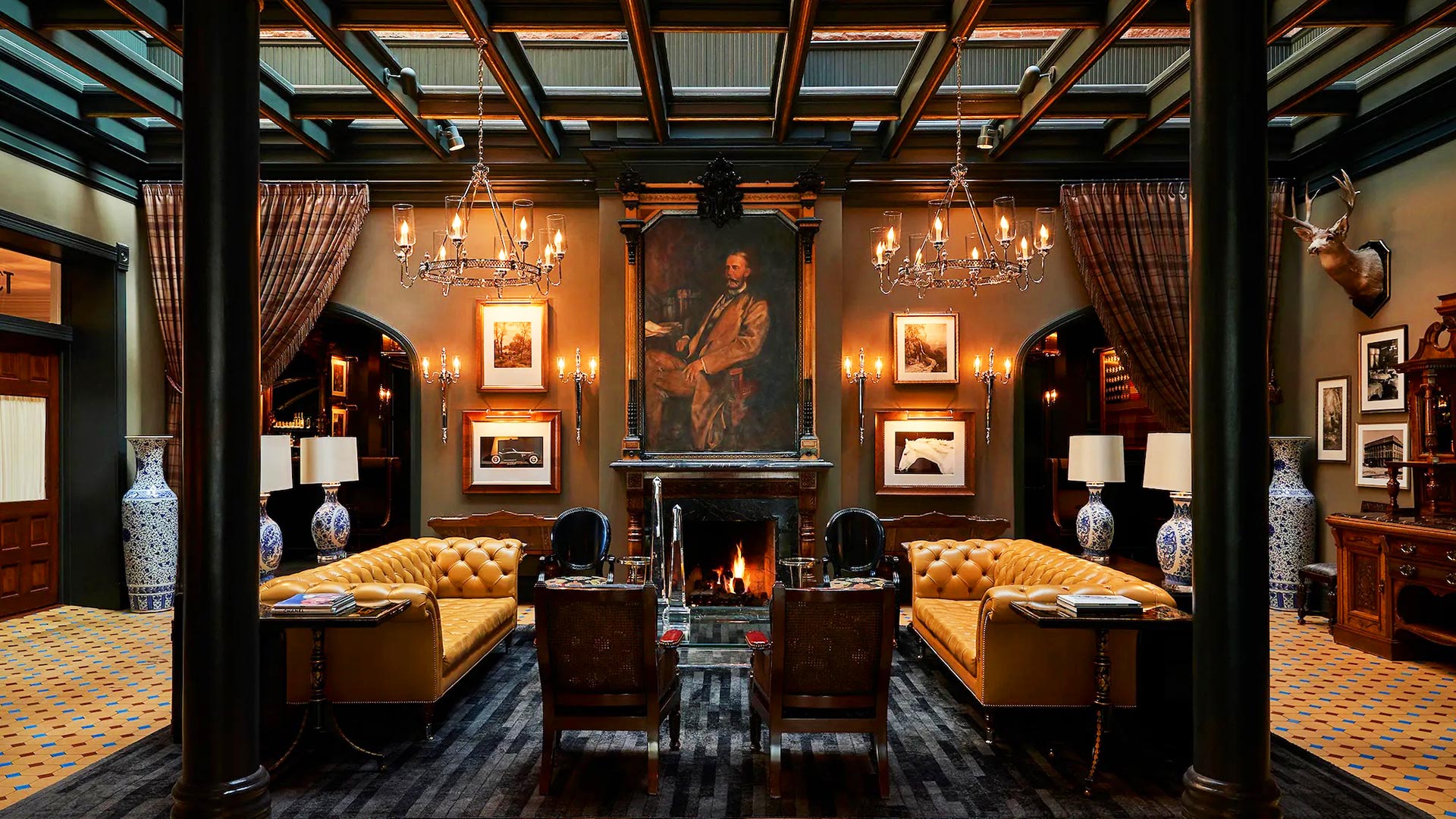
When Michelin announced it was expanding from restaurants to hotels in 2024, the hospitality industry had 2 reactions. The first: finally, a credible alternative to Forbes. The second: wait, what exactly are they measuring?
Two years in, the answer is clearer than it was at launch, and it's different from what most people assumed. Michelin Keys aren't the hotel equivalent of Michelin Stars. They're measuring something else entirely, and understanding the distinction matters if you're using them to decide where to stay.
The History (Brief)
Michelin has been recommending hotels in its guides since 1900. The little red book always included lodging alongside restaurant listings, using a system of icons (house symbols, comfort ratings) that was functional but never carried the prestige of the Stars. Hotels in the Michelin Guide were a secondary feature, useful for planning where to sleep after your 3-star dinner.
The Key system, launched in April 2024, elevated hotels to a primary category with their own distinct rating. The initial rollout covered France, Italy, Spain, Japan, and the United States. By late 2024, it expanded to Mexico, the UK, and several additional markets. The goal was to create for hotels what the Stars created for restaurants: a globally recognized shorthand for quality that travelers could trust.
The 5 Criteria
Michelin evaluates hotels on 5 specific dimensions:
1. Architecture and interior design. This isn't about how much money was spent on the decor. It's about coherence. Does the design tell a story? Does it relate to the building's history, the surrounding landscape, or a clear creative vision? A converted monastery with original stone walls and minimal intervention can score higher than a newly built property with a $50 million fit-out if the monastery's design has integrity and the new build feels generic.
2. Quality and consistency of service. Similar to Forbes in principle but weighted differently. Michelin cares about service, but it's one of 5 criteria, not 75% of the score. The inspectors evaluate whether the service matches the property's identity. A laid-back surf lodge with warm, casual staff can score well here. A 5-star city hotel with warm, casual staff might not, because the service doesn't match the positioning.
3. Personality and character. This is the criterion that separates Michelin from every other rating system. They're explicitly evaluating something subjective: does this hotel have a soul? Does it feel like it could only exist in this specific place, run by these specific people? Chain hotels with standardized design struggle here. Independent properties with a clear point of view thrive. A family-run ryokan in Japan, an artist-designed boutique in Mexico City, a converted farmhouse in Tuscany, these are the types of properties the character criterion was built for.
4. Value for the price. Michelin doesn't penalize expensive hotels, but it does evaluate whether the experience justifies the rate. A $2,000/night hotel that delivers a $2,000/night experience scores well. A $2,000/night hotel that delivers a $800 experience doesn't. Conversely, a $200/night hotel that dramatically overdelivers can earn Keys. This criterion keeps the system from becoming a wealth index.
5. Contribution to the surrounding setting. Does the hotel enhance its neighborhood, landscape, or cultural context? A property that engages with local artisans, sources from regional producers, preserves architectural heritage, or provides access to a natural environment scores here. A property that walls itself off from its surroundings (the gated-resort-on-a-coast model) has to compensate with the other criteria.
One, Two, and Three Keys
One Key: "A very special stay." The property excels in at least 2-3 of the criteria and is above average in the rest. One-Key hotels have clear personality and deliver an experience that's memorable without being superlative in every dimension. This is where the majority of Michelin-recognized hotels sit. Think of it as: you would specifically recommend this hotel to a friend visiting this city or region.
Two Keys: "An exceptional stay." The property excels across most or all criteria. The design, service, character, and value all operate at a level that makes the hotel a destination in itself, not just a place to sleep. Two-Key hotels are the ones where the where-you-stay is as important as the where-you-go. These are properties you'd plan a trip around.
Three Keys: "An extraordinary, unforgettable stay." The pinnacle. The property is operating at a level where the experience transcends the category. The design is landmark. The service is deeply personal. The character is unmistakable. The contribution to its setting is profound. Three-Key hotels are rare (fewer than 50 globally as of 2025) and represent Michelin's strongest statement: this hotel will change how you think about travel.
How Michelin Keys Differ From Forbes Stars
The most common question: if a hotel has Forbes Five Stars, does it get Three Michelin Keys? Not necessarily. The systems measure different things, and the overlap is incomplete.
Forbes is objective and service-centric. 900 criteria, most of them binary (did the staff do this, yes or no). A hotel earns Five Stars by executing a service playbook with near-perfect consistency. The system rewards operational excellence.
Michelin is subjective and identity-centric. 5 broad criteria, evaluated by inspectors who are trained to assess feel, character, and coherence. A hotel earns Three Keys by being exceptional in ways that can't be reduced to a checklist. The system rewards distinctiveness.
A large luxury chain hotel with immaculate service, standard design, and no particular sense of place might earn Forbes Five Stars and One Michelin Key. A small, design-forward independent with warm but informal service might earn Two Michelin Keys and a Forbes Four-Star. Both ratings are accurate. They're just answering different questions.
Forbes answers: "Is the service at this hotel consistently excellent?" Michelin answers: "Is staying at this hotel a distinctive, worthwhile experience?"
The Controversy
Michelin Keys haven't been universally embraced. The criticisms fall into a few categories:
Subjectivity. The character and personality criteria are inherently subjective, which means two inspectors could evaluate the same hotel differently. Michelin argues that extensive training and calibration sessions minimize this, but the concern is legitimate. Forbes's 900-criterion checklist leaves less room for individual inspector variation.
Overlap with the restaurant program. Some critics note that hotels with Michelin-starred restaurants seem to receive Keys at a higher rate than properties without. Michelin says the hotel and restaurant evaluations are independent. The correlation may simply reflect that properties investing in world-class food are also investing in world-class hospitality.
Pay-to-play questions. Unlike Forbes (where hotels pay a consulting fee to be inspected), Michelin claims its hotel inspections are entirely self-funded and that hotels do not pay to be evaluated. However, the selection process (which hotels Michelin chooses to inspect) is opaque, and some hoteliers have questioned whether visibility and relationships influence inclusion.
Geographic bias. The initial rollout favored European and established luxury markets. Properties in less-covered regions may take longer to be discovered by inspectors. Michelin has expanded rapidly, but coverage gaps remain.
What the Keys Mean for You
If you're a traveler trying to decide where to stay, Michelin Keys are most useful as a character filter. The properties that earn Keys tend to have a stronger sense of identity than the average luxury hotel. They're places where someone (an architect, an owner, a creative director) had a vision that extended beyond "make it nice."
One Key means you'll have a memorable stay. Two Keys means the hotel will likely be a highlight of your trip. Three Keys means the hotel is the trip.
The system is young enough that it's still being calibrated (some early ratings have already been revised), and the coverage isn't comprehensive enough to capture every great hotel in the world. But the 5-criteria framework, especially the emphasis on character, value, and contribution to place, is the most thoughtful evaluation model in current hotel ratings. It's measuring something that travelers care about and that other systems don't capture: whether a hotel is worth remembering.
Explore Related Stories



Read the Room Before You Book.