Every year, a handful of hotels manage to appear across multiple major award announcements within the same cycle. Forbes publishes in February. Michelin Keys roll out market by market. The CNT Gold List drops in January. T+L World's Best arrives in summer. When the same property shows up across 3 or more of these within a 12-month window, it's not coincidence. It's convergence, and convergence is the strongest signal in hotel ratings.
Here are the properties that collected the most recognition in the 2025-2026 awards cycle, what they share, and what the patterns tell you about where luxury hospitality is heading.
The Multi-System Winners
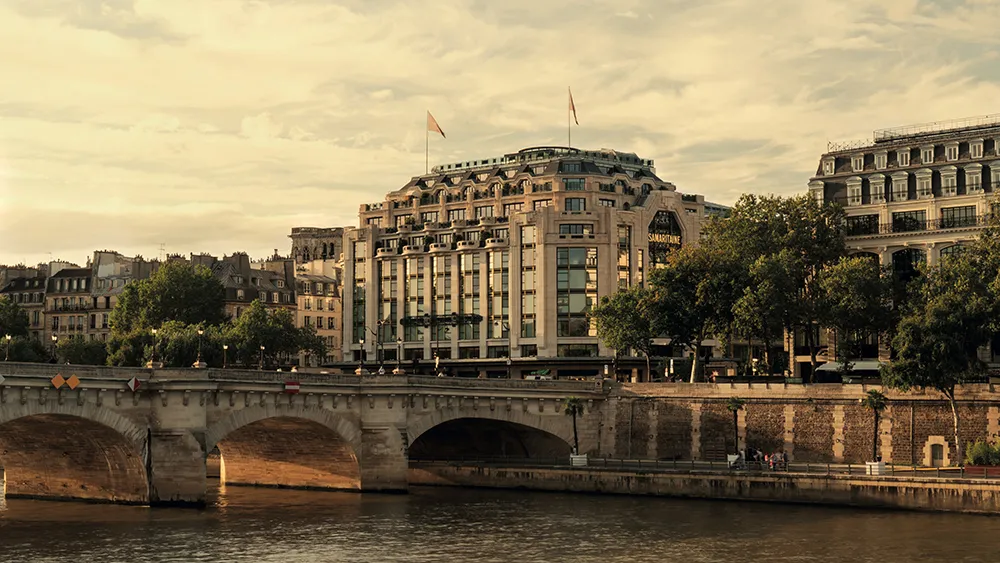
Cheval Blanc Paris continued its run as one of the most awarded new-build hotels in history. Three Michelin Keys (retained from the initial rating). Forbes Five Stars (retained). CNT Gold List (second consecutive year). The LVMH-owned property in the former La Samaritaine building on the Seine has now collected essentially every major credential available, and it did so within 4 years of opening. The speed is unusual: most hotels take 5-10 years to accumulate this breadth of recognition. Cheval Blanc managed it by being exceptional across every dimension simultaneously (design by Peter Marino, restaurant by Arnaud Donckele, Dior spa, Seine-front location).
Aman Tokyo maintained its position as the most consistently multi-awarded hotel in Japan. Forbes Five Stars. Michelin Keys. Gold List. T+L. The property's strength is that it scores well on criteria that usually conflict: the service precision that Forbes demands (Aman's staff-to-guest ratio enables it) and the character that Michelin values (the Japanese design language is distinctive without being theatrical).
The Connaught (London) had a strong cycle, holding Forbes Five Stars, Michelin Keys, and editorial appearances. The property benefits from recent investments (the Connaught Bar's renovation, ongoing room refreshes) that keep it current while maintaining the character that earned its original recognition.
Capella Bangkok continued to collect awards at a pace unusual for a hotel that opened during a pandemic. Forbes Five Stars and Michelin Keys, plus editorial recognition. The property on the Chao Phraya River has established itself as Bangkok's most awarded new entry, competing with (and in some metrics overtaking) the Mandarin Oriental and Peninsula, both of which have held their positions for decades.
The Breakout Properties
Every awards cycle produces properties that move from "known regionally" to "recognized globally." The 2025-2026 cycle had several.
Chable Yucatan (Mexico) broke through to broader international recognition. The inland hacienda property near Merida, built around a cenote, earned Michelin Keys for character and contribution to place, plus editorial recognition that expanded its profile beyond the Mexico-focused publications. The property's wellness programming (rooted in Mayan traditions) and its setting (jungle, cenote, restored hacienda) give it an identity distinct from the beach resorts that dominate Mexico's international reputation.
Passalacqua (Lake Como, Italy) consolidated its rapid rise. The former 18th-century villa, converted to a hotel in 2023, was named the world's best hotel by The World's 50 Best Hotels in its debut year and has since accumulated Michelin Keys and editorial recognition. The property is small (24 rooms), which limits its Forbes score (the service infrastructure of a 24-room villa doesn't map perfectly to the 900-point checklist) but maximizes its Michelin and editorial appeal.
Four Seasons Naviva (Mexico) continued to earn recognition in the 2025-2026 cycle for its radical departure from conventional resort structure. The 15-tent, adults-only property in a 48-acre jungle preserve adjacent to Four Seasons Resort Punta Mita operates without fixed schedules, restaurant hours, or a traditional spa building. The ratings recognize what the property represents: a model for luxury hospitality that strips away programming and lets the environment do the work. The recognition comes primarily from Michelin (character, contribution to setting) and editorial lists (the concept is irresistible to travel editors looking for something genuinely new).
Bulgari Roma entered the awards conversation after opening in 2023, with the 2025-2026 cycle bringing Forbes recognition and Michelin Keys. The property, in a restored 18th-century building on Piazza Augusto Imperatore, benefits from both the Bulgari brand's design sensibility and a Roman address that gives it cultural context.
The Properties That Held
As notable as the new entrants are the properties that maintained multi-system recognition year after year. The 2025-2026 cycle confirmed several long-term holds.
Mandarin Oriental Bangkok held Forbes Five Stars (its streak now spans decades) and retained Michelin Keys. The property's durability is a case study in institutional knowledge: the service culture at the MO Bangkok is transmitted generationally, with staff members who've been there 20-30 years training the next cohort.
Claridge's (London) maintained its cross-system presence. Forbes Five Stars, Michelin Keys, editorial recognition. The property continues to invest in incremental improvements (room renovations, F&B updates) without dramatic reinvention, which is the strategy that sustains long-term award performance.
The Peninsula Hong Kong held its position at the top of Hong Kong's award hierarchy. Forbes Five Stars, Michelin Keys, reader poll performances. The property's 2024-2025 room renovation gave inspectors and editors a fresh reason to confirm the existing rating.
What the Cycle Reveals
The 2025-2026 awards cycle amplified several trends.
New properties are winning faster. Cheval Blanc Paris, Capella Bangkok, and Passalacqua all accumulated multi-system recognition within their first 3-4 years. Previous generations of hotels took 5-10 years to build comparable award profiles. The acceleration reflects both the expansion of rating systems (more systems means more opportunities to be recognized quickly) and the quality of new openings (the hotels entering the market today are designed from day one to compete at the highest level).
Character is gaining weight. Properties that earn recognition for distinctiveness (Chable Yucatan, Four Seasons Naviva, Passalacqua) are accumulating awards alongside (and in some cases ahead of) properties that earn recognition for operational excellence. The Michelin Keys system has shifted the awards landscape toward properties with strong identities, and the editorial lists have followed.
Mexico is arriving. The 2025-2026 cycle included more Mexican properties across more award systems than any previous year. The combination of Michelin's expansion, Forbes's increased coverage, and editorial interest has given Mexico's luxury hotels the global recognition that the quality of the hospitality has warranted for years.
The convergence filter works. The hotels that appear across the most systems in the 2025-2026 cycle are, by any reasonable standard, the best hotels in the world. The methodology differences between Forbes (service checklist), Michelin (character evaluation), editorial lists (taste), and reader polls (satisfaction at scale) mean that a property earning recognition from 3+ systems has been validated from multiple independent angles. That's as close to an objective "best" as hotel ratings can produce.
Explore Related Stories

Read the Room Before You Book.