Asia produces some of the most awarded hotels on earth, and the reasons are structural. The continent has the deepest service cultures in global hospitality (Japan, Thailand, Hong Kong), some of the most architecturally distinctive properties anywhere (Bali, India, Sri Lanka), and a concentration of luxury hotel brands that compete at a level that pushes everyone higher. When Forbes inspectors visit Asia, the scores tend to be high. When Michelin evaluates for character and sense of place, Asia's best properties deliver something that purpose-built Western luxury rarely matches.
Here are the properties with the most impressive award stacks across the continent, organized by market.
Japan
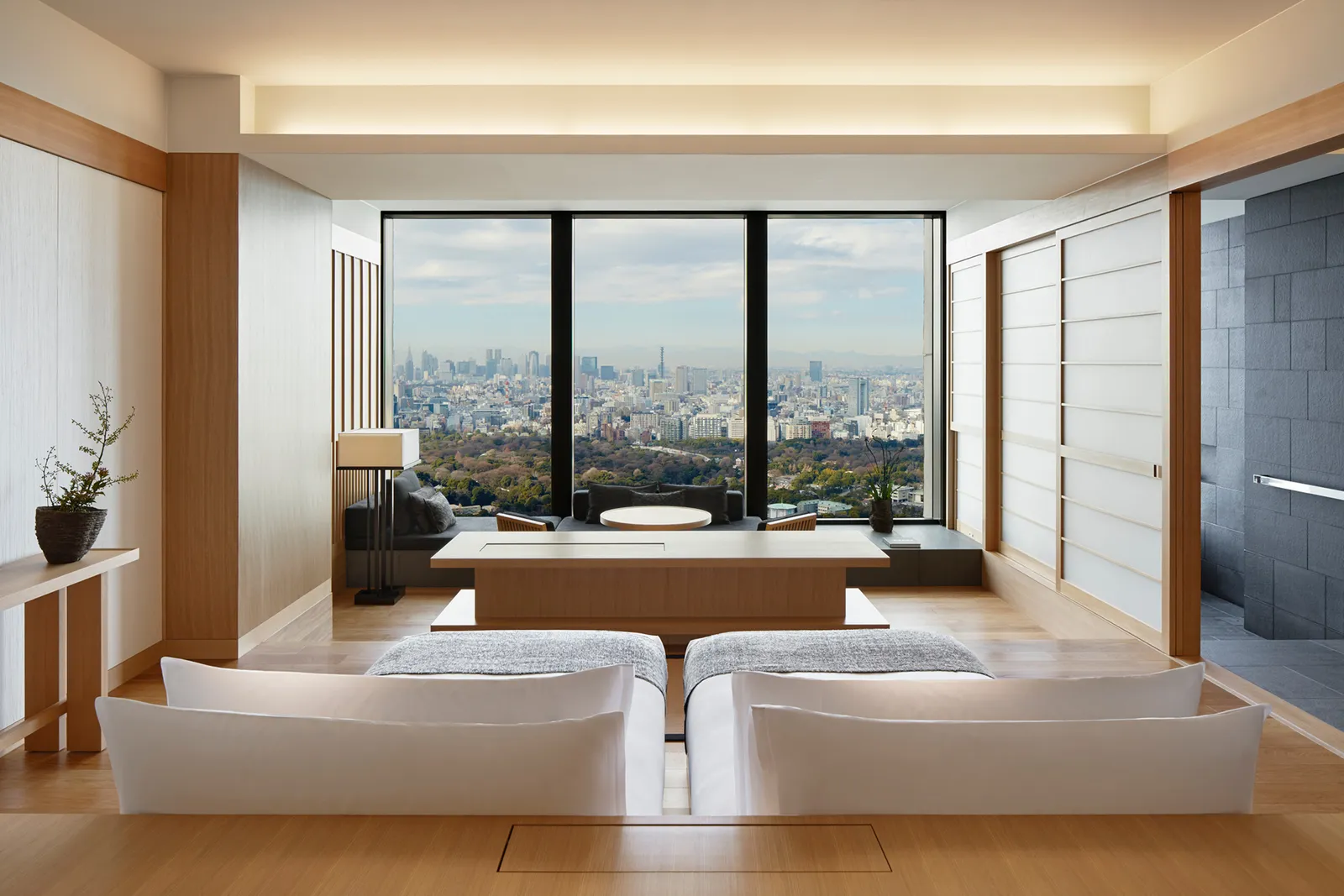
Aman Tokyo sits in the Otemachi Tower in central Tokyo and holds Forbes Five Stars, Michelin Keys, and regular appearances on the CNT Gold List and T+L World's Best. The property earns cross-system recognition for the same reason: it synthesizes traditional Japanese design principles (washi paper, ikebana, the concept of ma, or negative space) with a contemporary execution that feels both timeless and current. The spa draws on onsen traditions. The restaurant (Arva) serves Italian food, which seems counterintuitive until you eat there and realize the quality justifies the choice.
The Ritz-Carlton Kyoto benefits from a setting on the Kamogawa River in Higashiyama and a design by Peter Remedios that integrates Japanese craftsmanship (bamboo garden, washi screens, lacquerwork) into the Ritz-Carlton luxury framework. Forbes Five Stars, Michelin Keys, and strong editorial coverage. The property manages to satisfy Forbes's service checklist (the Ritz-Carlton brand's "Gold Standards" protocol aligns naturally with the Forbes methodology) while earning Michelin recognition for its connection to Kyoto's cultural heritage.
Park Hyatt Tokyo has been collecting accolades since 1994, making it one of the longest-running award holders in Asia. The property occupies floors 39-52 of the Shinjuku Park Tower with views over the Tokyo skyline to Mount Fuji. Forbes Five Stars. Michelin Keys. Editorial recognition across every major publication. The New York Grill and Bar remains one of Tokyo's most iconic dining rooms. The cultural cachet from Lost in Translation doesn't hurt, but the property holds its ratings on merit independent of the film.
Thailand
Mandarin Oriental Bangkok has been earning awards since before most current rating systems existed. The property opened in 1876 and has maintained its position at the top of Bangkok hospitality through multiple renovations, political upheavals, and competitive pressures. Forbes Five Stars (consistently, for decades), Michelin Keys, Gold List and T+L appearances that span generations of editors. The Authors' Wing (named for Somerset Maugham, Joseph Conrad, and others who stayed here) gives the property a historical depth that most competitors can't replicate.
Capella Bangkok earned an aggressive award stack within its first years (opened 2020). Forbes Five Stars at first inspection. Michelin Keys. Gold List recognition. The Jan Shrem-designed property sits on the Chao Phraya River with a design that references Thai architectural traditions through a contemporary lens. The speed of its award accumulation reflects both the quality of the property and Bangkok's status as one of the most thoroughly inspected hotel markets in Asia.
Four Seasons Resort Chiang Mai draws recognition for doing something different from the Bangkok palaces: rice paddies, water buffalo, Lanna culture, and a spa that uses Northern Thai ingredients and techniques. The property earns awards for its setting and character (Michelin, editorial lists) as well as the Four Seasons service standard (Forbes). The cooking school is frequently cited as one of the best hotel culinary programs in the world.
Hong Kong
The Peninsula Hong Kong is the most decorated hotel in Hong Kong's history and one of the most awarded in Asia. Forbes Five Stars (every year since the guide has covered Hong Kong), Michelin Keys, Gold List fixture, T+L perennial. The property opened in 1928 and has maintained its position through a series of expansions and renovations (the tower addition in 1994, the most recent room renovation). The fleet of Rolls-Royces, the afternoon tea, the helicopter pad: the Peninsula's props are iconic, but the awards stack reflects genuine operational excellence beneath the theater.
Mandarin Oriental Hong Kong competes with The Peninsula for the city's top award position. Forbes Five Stars. Michelin Keys. Editorial recognition. The property has a more corporate sensibility than The Peninsula (it's the brand's flagship) but compensates with consistency: the service execution is among the most reliable in Asia. The Krug Room and Pierre remain dining destinations that earn their own recognition independent of the hotel.
Southeast Asia
Amanpuri (Phuket, Thailand) was Aman's first property (1988) and helped define the "Aman experience" that has influenced luxury hospitality globally. Forbes recognition, Michelin Keys (when the guide expanded to Thailand), and decades of editorial coverage. The property's coconut-palm setting on the Andaman Sea and its pavilion-style architecture established the template that dozens of subsequent luxury resorts have attempted to copy.
COMO Shambhala Estate (Bali) collects awards primarily from editorial lists and Michelin for its wellness programming and Ayung River valley setting. The property functions as both a wellness retreat and a luxury resort, and the dual identity gives it access to awards in both categories. The resident Ayurvedic doctor, the yoga program, and the estate's organic garden all contribute to the recognition.
Capella Ubud (Bali) earned an unusually strong award stack for a tented camp property. The Bill Bensley-designed "glamping" concept (tents on stilts above the Keliki River valley) was provocative enough to attract editorial attention and distinctive enough to earn Michelin Keys for character. The property demonstrates that awards in Asia increasingly favor the unexpected over the conventional.
India
The Oberoi Udaivilas (Udaipur) is India's most consistently awarded hotel. The property sits on the banks of Lake Pichola with architecture that references Rajasthani palace traditions (domes, courtyards, reflecting pools, colonnades). Forbes has rated it favorably, T+L readers have voted it among the world's best hotels repeatedly, and editorial lists include it regularly. The semi-private pools in the premier rooms and the lake-view spa are cited across multiple award categories.
Taj Lake Palace (Udaipur) occupies an 18th-century palace in the middle of Lake Pichola, giving it a setting that no other hotel in the world can replicate. The awards tend to emphasize the property's heritage and location (Michelin character criterion, editorial lists) rather than service innovation (the service is very good but doesn't reach the methodical precision that earns the highest Forbes marks). The palace setting is a competitive advantage that no amount of investment can create from scratch.
The Leela Palace New Delhi represents India's strongest entry in the Forbes Five-Star conversation. The property combines a New Delhi address (Diplomatic Enclave) with service standards that have been specifically trained to the Forbes methodology. The result: consistent Forbes Five Stars in a market where very few properties achieve the rating.
What Asia's Award Density Reveals
The concentration of multi-award hotels in Asia reflects several structural advantages.
Service as culture. In Japan, Thailand, and Hong Kong, the concept of anticipatory, detail-oriented service predates Western rating systems by centuries. The Forbes 900-point checklist is essentially measuring something that Asian hospitality cultures have been practicing organically. Hotels in these markets don't need to train staff to the Forbes standard; they need to translate their existing service culture into the Forbes framework.
Design as identity. Asian hotels operate in cultural contexts (Japanese minimalism, Thai craftsmanship, Balinese Hindu-Buddhist art) that provide a natural source of the "character" and "personality" that Michelin evaluates. A hotel in Kyoto or Ubud or Chiang Mai has an architectural vocabulary to draw from that's intrinsically distinctive. Hotels in markets without that cultural depth have to manufacture character; Asian hotels can inherit it.
Competition. The density of luxury hotels in Asian capitals (Bangkok alone has over a dozen legitimate Five-Star contenders) creates competitive pressure that pushes quality higher. Hotels that rest on their reputation get overtaken by new entrants. The constant competitive churn means that the properties that maintain their awards year after year are genuinely operating at the highest level, because anything less gets noticed immediately.
The result: Asia produces multi-award hotels at a rate that exceeds any other continent relative to its hotel room inventory. The best properties in Tokyo, Bangkok, Hong Kong, and Bali are competing at a global standard that they've helped define.
Explore Related Stories

Read the Room Before You Book.