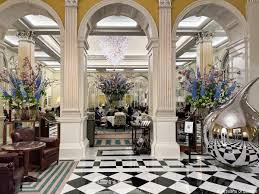
Europe has the deepest concentration of multi-award hotels on earth. The continent benefits from every major rating system: Forbes Travel Guide inspects across the region, Michelin Keys launched with European markets, AAA covers select properties through international partnerships, and the editorial lists (CNT Gold List, T+L World's Best) skew heavily European because that's where their editors and readers travel most frequently.
The result is a group of hotels that have accumulated recognition across so many systems that their award credentials read like a CV. Here are the properties with the most impressive collections, organized by region, along with what those award stacks actually tell you.
United Kingdom and Ireland
Claridge's (London) carries Forbes Five Stars, Michelin Keys, consistent Gold List appearances, and a permanent spot on seemingly every British "best hotel" list. The property is a case study in how heritage and reinvention coexist. The Art Deco building dates to the 1850s (the current structure to 1929), but the rooms, food, and service reflect continuous investment. Claridge's earns cross-system recognition because it scores well on every axis: Forbes loves the service precision, Michelin loves the character, and editors love writing about it.
The Connaught (London) holds a similar award portfolio to Claridge's but with a different personality. Where Claridge's is theatrical, The Connaught is understated. The property earns Forbes Five Stars through meticulous service, Michelin Keys through design (the Carlos Place building, the Tadao Ando bar) and food (Helene Darroze's 2-Michelin-star restaurant), and editorial recognition for being the kind of hotel that people who live in London choose when they want to feel like they're staying somewhere else.
Adare Manor (County Limerick, Ireland) swept multiple awards after its 2017 renovation and became, by most metrics, the most awarded hotel in Ireland. Forbes Five Stars. Michelin Keys. T+L World's Best recognition. The property occupies a Gothic Revival manor house on 840 acres with a Tom Fazio golf course, an 18th-century formal garden, and a spa. The renovation was ambitious enough to justify the awards; it wasn't a refresh but a ground-up reimagining of a heritage estate.
France
Le Bristol Paris has held Forbes Five Stars every year since the guide expanded to France and earned Michelin Keys at launch. The property sits on Rue du Faubourg Saint-Honoré and operates with a service culture that predates the rating systems evaluating it. The restaurant, Epicure (3 Michelin stars), gives the hotel a credential that most competitors lack: a standalone dining destination that also happens to be the hotel restaurant.
Hotel Plaza Athenee (Paris) accumulates awards across every system and benefits from both its Avenue Montaigne address and the gravitational pull of Alain Ducasse's culinary program. The property holds Forbes Five Stars and Michelin Keys, appears on editorial lists reliably, and wins reader polls. The recent renovation maintained the classic Parisian palace aesthetic while updating the rooms to a standard that satisfies both Forbes inspectors and Instagram.
Cheval Blanc Paris earned an aggressive award stack within its first 2 years of operation (it opened in 2021). Forbes Five Stars, Three Michelin Keys, and Gold List recognition arrived faster than for almost any new hotel in memory. The LVMH-owned property occupies the former La Samaritaine department store on the Seine, and the combination of Arnaud Donckele's restaurant (2 Michelin stars), Peter Marino's interiors, and a Dior spa created something that every rating system wanted to recognize.
Italy
Hotel de Russie (Rome) holds Forbes recognition, Michelin Keys, and perennial editorial appearances. The Piazza del Popolo location and Giuseppe Valadier garden give the property a setting that's difficult to replicate, and the Rocco Forte management delivers the service consistency that Forbes requires.
Passalacqua (Lake Como) earned an extraordinary award haul within its first 2 years of operation, including the #1 spot on The World's 50 Best Hotels list in its debut year. The 18th-century villa conversion (24 rooms, lakefront gardens, interiors that mix original frescoes with contemporary comfort) represents a new model for Italian luxury: small, personal, and anchored in a specific place. The speed of its recognition reflects both genuine quality and the appetite among rating systems for properties with character.
Borgo Egnazia (Puglia) represents a newer category of multi-award Italian hotel. The property doesn't trade on Roman history or Amalfi Coast views. It's a purpose-built resort in Puglia that earns awards for design (the property is modeled on a traditional Apulian village), spa (the Vair Spa draws on local healing traditions), and food (the cooking school and restaurants use local ingredients in ways that satisfy both Michelin inspectors and magazine editors).
Switzerland
Bürgenstock Resort (Lake Lucerne) earned a rapid award accumulation after its 2018 reopening. The property had been a Swiss landmark since the 19th century, but the 4-year, $550 million renovation repositioned it as one of Europe's most complete luxury resorts: 3 hotels, a spa with an indoor/outdoor Alpine pool overlooking the lake, and restaurants that earned their own recognition. The Alpine setting does heavy lifting on the Michelin character criterion.
Baur au Lac (Zurich) has been earning accolades since 1844, making it one of the longest continuously operating luxury hotels in Europe. The property holds Forbes Five Stars and Michelin Keys, and its longevity on editorial lists is a function of genuine consistency. The family ownership (6th generation) provides the kind of stable leadership that prevents the operational drift that costs other hotels their ratings.
Spain and Portugal
Mandarin Oriental, Barcelona combines a Passeig de Gracia address with a building by Carlos Ferrater, a restaurant by Carme Ruscalleda, and a spa by the MO brand's in-house wellness team. The property earns Forbes Five Stars and Michelin Keys and benefits from being one of the few luxury hotels in Barcelona that operates at a level comparable to its Paris or London counterparts.
Six Senses Douro Valley (Portugal) collects awards from a different angle. The property is a restored 19th-century manor house in the Douro wine region, and its recognition comes primarily from Michelin (character, contribution to place, value) and editorial lists (the setting is irresistible to travel writers). Forbes has rated the property favorably as well, though the Six Senses service philosophy (relaxed, personal) differs from the choreographed precision that earns the highest Forbes marks at palace hotels.
What the Award Density Tells You
Europe's concentration of multi-award hotels reflects 3 realities.
First, coverage. Every rating system operates in Europe. A hotel in Paris or London has the opportunity to earn Forbes Five Stars, Michelin Keys, AAA Diamonds (through partnerships), and editorial recognition simultaneously. A comparable hotel in Bogota or Muscat doesn't have that opportunity because the systems haven't expanded there yet.
Second, heritage. European hotels have had decades (in some cases centuries) to develop the service cultures, culinary programs, and physical properties that rating systems reward. A hotel that opened in 1910 and has been maintaining Five-Star standards since 1960 has a structural advantage over a hotel that opened in 2020, no matter how good the new property is.
Third, editorial gravity. Travel editors and inspectors spend more time in European capitals than anywhere else, which means European hotels are discovered, evaluated, and recognized faster and more frequently than properties in less-visited regions. A brilliant hotel in Lagos, Nigeria, might wait years for a Forbes inspection. A brilliant hotel in Paris might be inspected within months of opening.
The multi-award European hotels deserve their recognition. But the density of that recognition says as much about the rating systems' geographic priorities as it does about the hotels themselves.
Explore Related Stories

Read the Room Before You Book.